
Welcome to the Department of Anthropology
What is anthropology?
Anthropology is the study of the origin, development, and behavior of humans, and includes three common specialties or subfields: cultural anthropology (the study of behavior and culture), archeology (the study of material human remains of the past), and biological anthropology (the study of the biological basis of human physical and behavioral variation).
Areas of Study
Archaeology
Our archaeology faculty is particularly strong in expertise on the U.S. Southeast, the Great Plains, Mesoamerica, and South America. We have strengths in GIS, remote sensing (air, space, and ground), materials science, environmental dynamics, quantitative techniques, and public archaeology.
Learn More
Biological Anthropology
Biological anthropology is broadly defined as encompassing the present and past nature and evolution of humankind and other primates. Our faculty are particularly strong in dental anthropology, biomechanics, and advanced quantitative techniques.
Learn MoreCultural Anthropology
Cultural anthropologists focus on issues such as ethnicity, gender, class, religion, and public culture as shaped by history and migration.
Learn More
Opportunities in anthropology
The Department of Anthropology at the University of Arkansas is happy to invite applications for a tenure-track Assistant Professor of Cultural Anthropology to start in August 2027. For more information about the position and how to apply, click below or check out the University of Arkansas's career page.
Upcoming Events
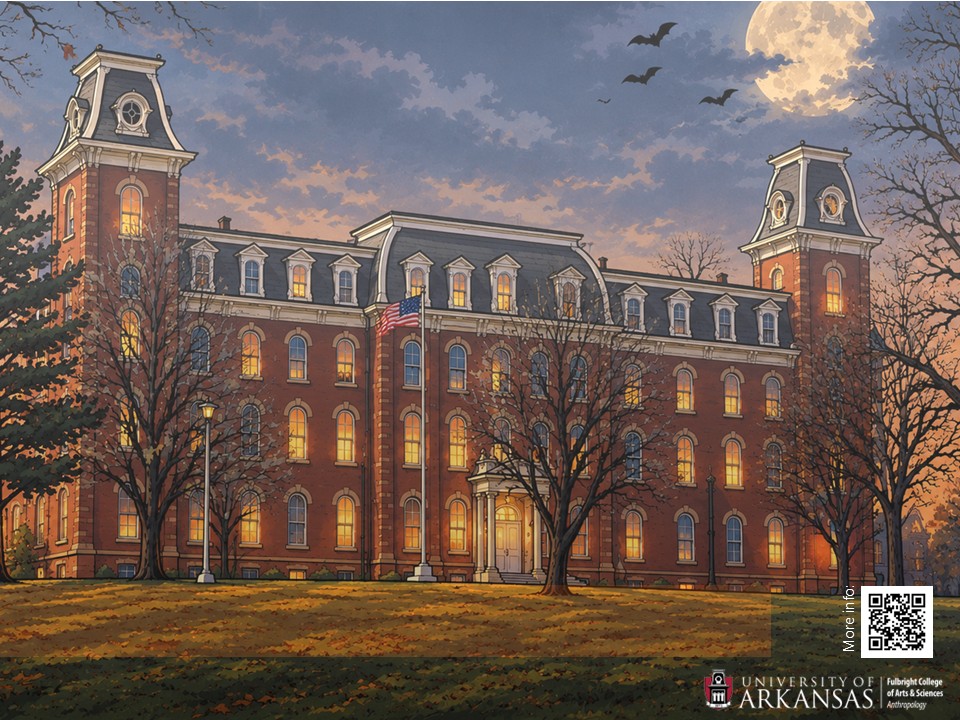
Spooky Spectacle: Anthropology Open House
Bones. Burials. Artifacts. Culture . . . and the science of being human.
Family friendly, costumes encouraged, and refreshments provided. Come if you dare!
Old Main 1st floor
Wednesday, October 28, 2026
4:00 - 7:00 PM
Anthropology Features
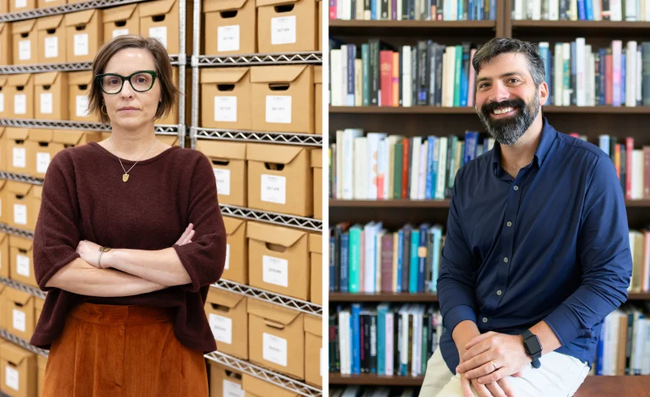
This year's MacArthur Fellows include researchers who fuse science and justice
Kate Spradley and Felipe De Brigard are two of this year's MacArthur Fellows, each working at the interface of science and justice.

Upcoming Event - Rites of Passage: Toothy Traditions!
When an American child loses their tooth, they put it under a pillow for the Tooth Fairy, who then leaves a gift in return! But did you know that children in other parts of the world have completely different baby tooth traditions. This event will allow participants to learn more about their teeth and global practices surrounding tooth loss! October 17th, 10AM-12PM, Fayetteville Public Library.
ANTHROPOLOGY IN THE NEWS